IELTS Speaking
Practice Online
Improve your fluency, vocabulary, and confidence with instant Evaluation and real IELTS speaking tests — Part 1, Part 2 and Part 3, exactly like the real exam.
Speaking Tests
Evaluation
& Vocabulary
Score
11 of 15 planned tests live · new tests added regularly.
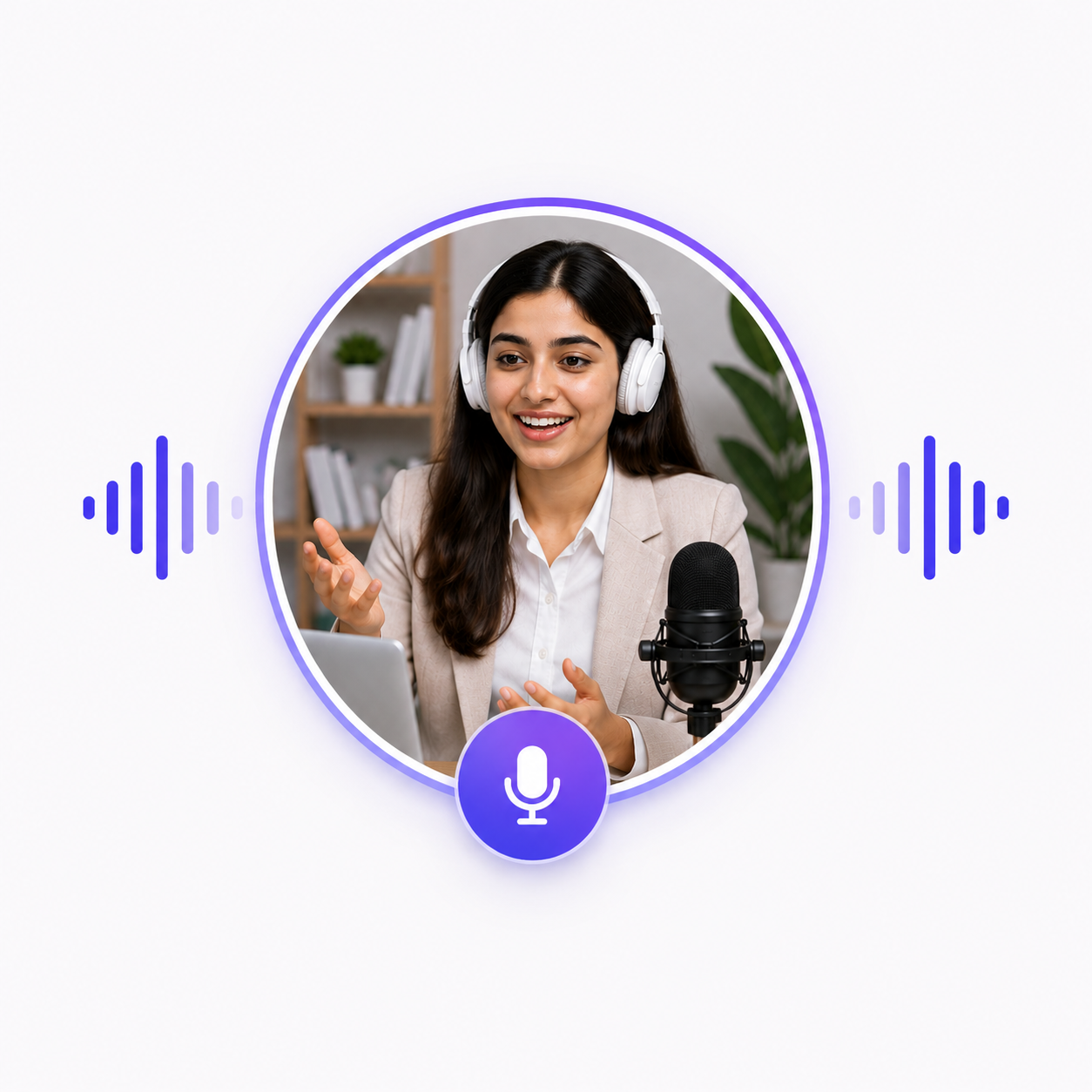
"The personalized feedback helped me improve my speaking score significantly!"
Before You Start — Quick Tips
A few things that will make your practice session smoother and more accurate.
Allow Microphone Access
Your browser will ask for microphone permission — click "Allow" so your answers can be recorded and evaluated.
Find a Quiet Place
Sit somewhere quiet with minimal background noise so both the questions and your voice come through clearly.
Speak Naturally
Answer as you would to a real examiner. Don't read from memorised scripts — natural speech scores better.
Don't Fear Mistakes
A small pause or slip is completely fine. Focus on fluency and getting your ideas across clearly.
Watch the Timer
Each part has a time limit, just like the real exam. Try to use the full time to give a complete answer.
Choose Your Practice Test
Every test has its own Part 1, Part 2 cue card and Part 3 discussion, with instant AI evaluation.
Complete IELTS
Speaking Preparation
Our speaking practice covers all 3 parts of the IELTS test with real exam questions and expert evaluation.
Part 1
Introduction & InterviewCommon questions about yourself, home, work, studies and more.
Part 2
Individual Long TurnSpeak for 1-2 minutes on a given topic with preparation time.
Part 3
Two-way DiscussionDiscuss abstract ideas and issues in more depth with the examiner.
Why Practice with Us?
Real Exam Environment
Experience real 1-on-1 speaking test online.
Expert Evaluation
Get detailed feedback from experienced IELTS tutors.
Track Your Progress
Monitor test scores and focus on weak areas.
Practice Anytime
Practice anytime, anywhere at your convenience.
Frequently Asked Questions
Everything you need to know before you start your IELTS Speaking practice test.
What does the IELTS Speaking practice test include?
Each test covers all three parts of the real IELTS Speaking exam — Part 1 (introduction and interview questions), Part 2 (a cue card with 1 minute of preparation time and a 1–2 minute long turn), and Part 3 (a two-way discussion with the examiner). As soon as you finish, you get an instant AI-generated band score along with detailed feedback on Fluency & Coherence, Lexical Resource, Grammatical Range & Accuracy, and Pronunciation.
Is the IELTS Speaking practice test free?
Yes, all 11 Speaking practice tests are completely free, so you can try the full Part 1–3 format and get your AI evaluation at no cost.
How is my speaking evaluated?
Your spoken answers are recorded and scored against the same four official IELTS Speaking band descriptors examiners use — Fluency & Coherence, Lexical Resource, Grammatical Range & Accuracy, and Pronunciation — giving you an overall band score plus specific, actionable feedback on what to improve.
Do I need a microphone to take this test?
Yes, you'll need to allow microphone access in your browser so your spoken answers can be recorded and evaluated accurately. For the best results, practice somewhere quiet with minimal background noise.
Does this match the Computer-delivered IELTS (CBT) speaking format?
Yes. Even in the Computer-delivered IELTS format, the Speaking test is still conducted face-to-face or over video call with a real examiner — it's never fully automated on exam day. Practicing here gets you comfortable with the same question types, timing and structure you'll face, so you walk in prepared and confident.
Consistent practice is the key to achieving your desired band score.
Start your IELTS speaking practice today and speak with confidence!
About the IELTS Speaking Practice Test
This IELTS Speaking practice test online mirrors the real computer-based IELTS exam format used at IDP and British Council test centres — Part 1 introduction questions, a Part 2 cue card with preparation time, and a Part 3 discussion, all with instant AI evaluation across Fluency, Lexical Resource, Grammar and Pronunciation. All 11 tests are completely free. Combine them with our Listening, Academic Reading, General Training Reading practice tests, or take a full IELTS computer-based mock test covering all sections together.